
 Kenya
Kenya


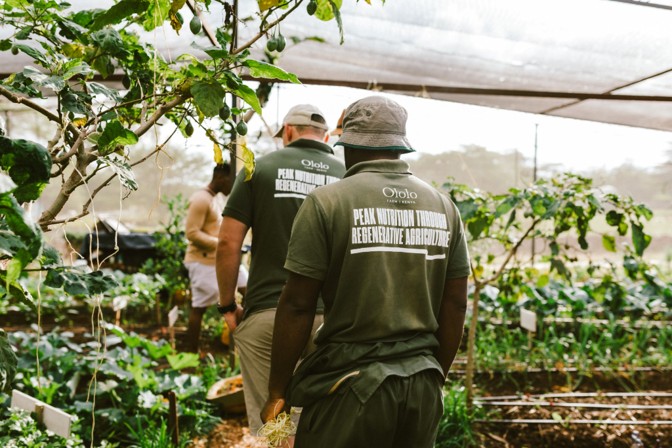
At Ololo Farm, circular agriculture did not begin as a grand plan. It emerged from a practical question: how can the output of one part of a farm become the input for another?
By George Chapman | Ololo Farm, Kenya
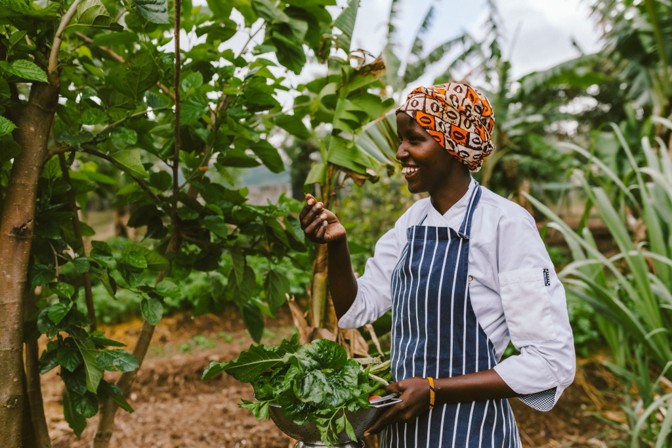 From garden to kitchen and back again: Ololo’s farm and lodge operate as interconnected parts of the same food system.
When we first started farming at Ololo, on the southern edge of Nairobi National Park, I don’t think we ever sat down and decided to build a “circular farm”.
It happened more gradually. We had a safari lodge kitchen producing food waste, chickens and pigs that needed feeding, manure to manage, vegetables to grow and a busy kitchen that needed energy.
Over time, we started asking a fairly simple question: could the waste from one part of the farm become useful somewhere else?
As the farm grew and we experimented with different enterprises, we began to realise that what appeared to be waste in one part of the operation could often become a valuable input somewhere else.
Turning waste into feed
Animal feed was an obvious place to start.
For livestock farmers in Kenya, the cost of commercial feed has become an increasingly significant challenge. According to the Association of Kenya Feeds Manufacturers, commercial animal-feed prices have risen by around 30 per cent over the past four years. For poultry and pig producers, where feed represents one of the largest costs of production, finding alternatives is as much an economic consideration as an environmental one.
At Ololo, this led us into the surprisingly useful world of black soldier flies.
The principle is remarkably simple. Black soldier fly larvae (BSFL) consume organic material and convert it into protein- and fat-rich biomass that can be incorporated into livestock feed. The residual material, known as frass, can then be returned to the soil as an organic amendment.
“Organic waste becomes insect protein, insect protein becomes livestock feed, and nutrients eventually return to the farm.”
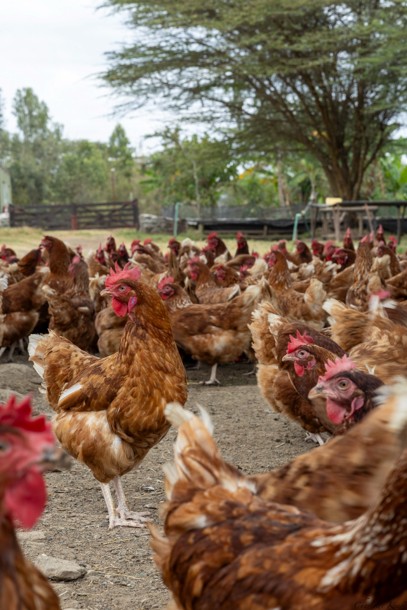 Ololo’s laying hens are part of a wider effort to keep nutrients circulating within the farm rather than treating organic material as waste.
We have taken the same approach with food waste on a much larger scale. Each week, approximately six to seven tonnes of organic food waste from local markets arrives at Ololo. Instead of being discarded, much of it can be put to productive use.
Our pigs are particularly effective at turning this otherwise wasted food into something valuable. Fresh fruit and vegetable waste provides a varied and nutritious addition to their diet, helping us produce healthy, high-quality pork while making productive use of food that would otherwise go to waste.
Finding value further along the food chain
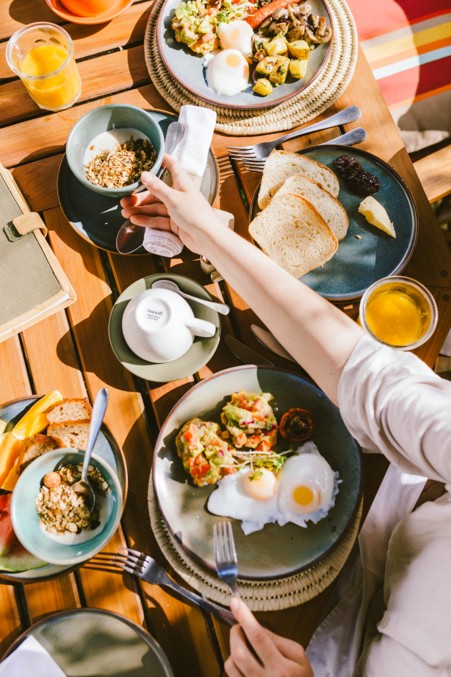 The farm-to-table relationship at Ololo also creates opportunities to recover value from food by-products after they reach the lodge kitchen.
We have also tried to extend this thinking further along the food chain.
After processing our chickens, for example, the carcasses are slowly cooked to produce bone broth. It is a relatively simple way of extracting additional nutritional and economic value from something that might otherwise have been discarded.
Even after food reaches the table, there are opportunities to recover nutrients. Bones left on plates at the lodge restaurant — from beef, pork or lamb — are collected and processed through a kiln. The resulting bone char is rich in minerals, particularly calcium and phosphorus, and can be incorporated back into the soil in our shamba and vegetable gardens.
For us, this is an important part of circular farming that is sometimes overlooked. Recycling nutrients is not only about reducing waste; it can also help reduce our dependence on externally purchased farm inputs.
From manure to energy
The same principle applies to energy.
Animal manure and other suitable organic material from around the farm are fed into our biodigester, where microorganisms break them down in the absence of oxygen. The process produces biogas, which we use as a cooking fuel for around 50 staff on the property. Manure that once represented a waste-management problem now helps meet part of our daily energy needs.
Our mushroom enterprise creates yet another useful by-product. Once the mushrooms have been harvested, the spent mushroom substrate still contains organic matter and nutrients. Rather than disposing of it, we incorporate it into our gardens as a soil amendment, returning organic matter to the land.
Closing the loop ultimately brings nutrients back to the shamba, while helping reduce reliance on externally purchased inputs.
Still finding loops to close
None of this means Ololo is a perfectly circular farm. We still purchase external inputs, we still generate waste, and some of the systems we have experimented with have required more labour, infrastructure and management than we initially expected.
But that has perhaps been the most important lesson.
After years of working on the farm, I have come to think that circular agriculture is less about any single technology — whether black soldier flies, biodigesters, bone char or compost — and more about changing the way we look at the resources already around us.
On a farm, the end of one process can often be the beginning of another.
Once you stop seeing waste simply as something to get rid of, you start seeing opportunities everywhere.
At Ololo, we are still finding new loops to close.